Choosing the best High Efficiency DC Motor in 2026 is not a simple ranking exercise. The right choice depends on load, speed range, duty cycle, available space, and control requirements. A compact motor driving a pump faces different demands from one moving a robotic arm. Even a strong efficiency rating can disappoint if the motor is oversized or poorly matched to its controller.
The IEA and UNIDO report Accelerating the Global Adoption of Energy-Efficient Motor Systems estimates that motor-driven systems account for about 45% of global electricity consumption. That figure covers motor systems broadly, not DC motors alone, and the report dates to 2011. It remains useful context, but it should not be mistaken for a current DC-motor market comparison. The U.S. Department of Energy’s motor-systems guidance also emphasizes evaluating the full system, including controls and operating conditions. Small details matter.
This guide compares motor types, efficiency claims, and selection factors that buyers can verify. Look beyond a headline percentage: check how efficiency was measured, at what load, and with which controller. A specification sheet can still mislead. Actual performance changes with heat, maintenance, and the driven equipment. There is no universal winner; the best motor is the one that meets the application’s needs efficiently and reliably, with evidence to support the choice.
How DC Motor Efficiency Is Measured in 2026
Motor efficiency is useful shaft power divided by electrical input power, multiplied by 100. That sounds simple. Reliable results require measuring both sides at the same operating point. Voltage and current are measured at the motor terminals, while torque and speed sensors capture shaft output. Heat changes everything.
Mechanical power is calculated from torque and rotational speed; electrical input comes from voltage and current. For PWM-driven tests, a power analyzer should sample voltage and current together, since switching can create ripple. Record controller losses separately when assessing the motor alone. Otherwise, the result describes the complete drive system. Small details matter.
State the voltage, load, speed, and temperature, and allow the motor to reach thermal stability before recording results. Efficiency varies across the speed-load range, so one peak figure cannot describe every application. Comparisons are fair only when testing methods match. Sensor calibration, shaft alignment, and bearing friction can all affect readings. I would treat a headline efficiency number cautiously when its test conditions are missing.
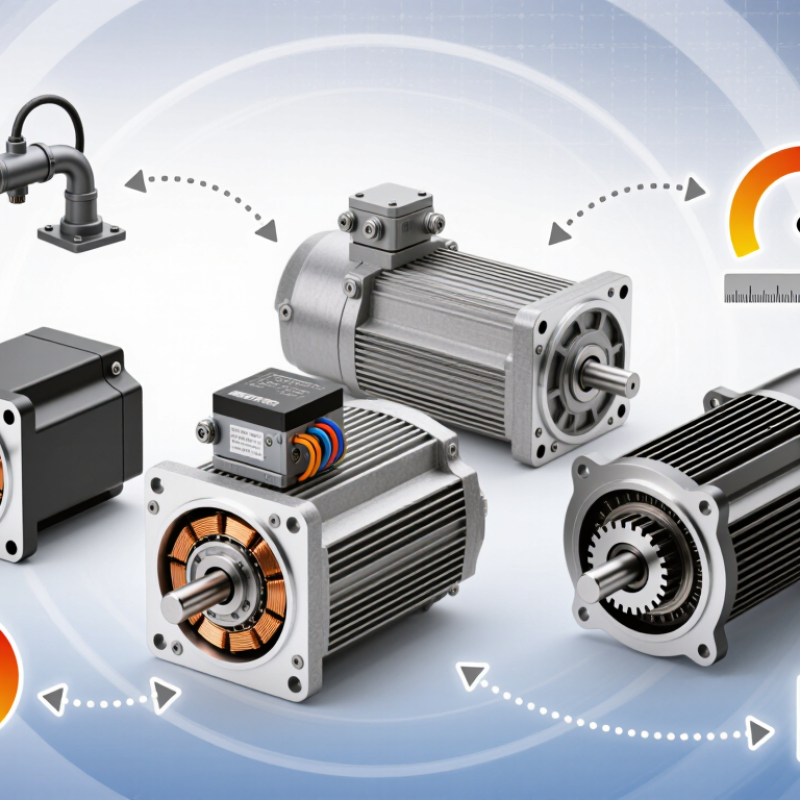
主要 Types of High-Efficiency DC Motors and Their Design
High efficiency depends on the motor’s operating point, not just its label.
Brushless DC motors use permanent magnets on the rotor and electronically switched coils in the stator. With no brushes rubbing against a commutator, they avoid brush friction and wear. Their design needs a controller, and its switching strategy affects both heat and smoothness.
Brushed permanent-magnet DC motors have a simpler layout: magnets surround a rotating armature, while brushes deliver current. They can be efficient in well-matched applications, but brush contact creates friction and gradual wear.
Small details matter.
Coreless designs remove the iron core from the armature, reducing rotor mass and certain iron losses. They can respond quickly, though their compact windings may struggle to shed heat under sustained load.
Wound-field DC motors use energized field coils instead of permanent magnets. Adjusting field current can offer useful speed control, but the field coils consume power and add heat.
There is no clean winner on a datasheet alone.
A practical comparison should include load, speed range, controller losses, cooling, and duty cycle. Otherwise, an impressive peak-efficiency figure can mislead. That comparison is imperfect unless real operating conditions are known.
Key Factors for Comparing DC Motor Performance
In 2026, the best high-efficiency DC motor depends on the job, not a single headline rating. A peak efficiency figure can be misleading if it occurs outside your normal operating range. Compare efficiency at the actual voltage, speed, and torque your equipment needs. Measure twice.
Look at continuous torque and duty cycle, not just brief starting performance. A motor that runs a small conveyor for hours faces different demands from one that moves a valve occasionally. Check the controller, too: mismatched settings can waste energy or create unwanted heat.
Heat matters. During testing, record current draw and temperature after the motor has operated under a realistic load, not just on an empty bench. A warm casing may be normal, but rising temperatures can signal excessive load, poor ventilation, or an unsuitable setup.
Compare noise and vibration as well; a rough sound can reveal mechanical trouble that efficiency numbers miss. Datasheets help narrow choices, though real installations are rarely as tidy as test conditions. If possible, repeat measurements at several speeds and loads, and note the conditions beside each result.
Best Motor Choices for Different Applications
For compact battery tools, a permanent-magnet brushed DC motor can be a practical choice: its controls are simple, and replacement is straightforward. In drones, pumps, and equipment needing frequent speed changes, a brushless DC motor usually offers better efficiency and less brush wear. Precision devices may benefit from a coreless motor, which reduces rotor inertia, while a geared DC motor suits applications that need strong torque at low speed. There is no universal winner. The right choice depends on load, duty cycle, heat, and control requirements.
The International Energy Agency’s 2011 report, Energy-Efficiency Policy Opportunities for Electric Motor-Driven Systems, estimates that motor-driven systems consume 43–46% of global electricity. That figure is not limited to DC motors, but it highlights why matching a motor to its real workload matters. A motor running oversized or poorly loaded can waste energy, even if its efficiency rating looks impressive. Check efficiency across the operating-speed range, not just at one test point. Small details count.
Tips: Measure shaft speed and load during normal use. Leave room for cooling, and compare controller losses too. A quiet motor may still run hot; I would verify temperature under a full-duty test before choosing.
Best High-Efficiency DC Motors in 2026: Choices by Application
Indicative motor efficiency ranges for common DC motor types. The best choice depends on the application, operating point, and drive system.
Brushless DC motors are often a strong choice for EV traction, pumps, and fans because they combine high efficiency with precise electronic control. Brushed and coreless motors can suit simpler or lightweight precision applications. Actual efficiency varies with motor size, load, speed, controller, and gearing.
How to Select a High-Efficiency DC Motor for Your Needs
What Is the Best High Efficiency DC Motor in 2026?
How to Select a High-Efficiency DC Motor for Your Needs
The best motor is the one that performs efficiently at your actual operating point, not just at its peak rating. Start with the required speed, continuous and starting torque, supply voltage, and duty cycle. A small conveyor moving cartons needs steady torque; a handheld device may need low weight and precise speed control. The IEA’s 2016 analysis estimated that motor-driven systems use about 53% of global electricity, making careful motor selection worthwhile.
Choose brushed or brushless DC based on maintenance, control, and operating conditions. Brushless motors can reduce brush wear, but they typically require an electronic controller. Check the efficiency curve at your expected load, then confirm heat, noise, and starting current in a real test. The U.S. Department of Energy’s Improving Motor and Drive System Performance sourcebook reports that motor systems account for about 68% of electricity use in U.S. manufacturing. Those figures describe broad systems, not a guarantee of savings for one motor. That distinction matters.
Tips: Ask for efficiency data across the working speed range, not one headline number. Match the controller to the motor, and leave room for cooling. Then test your real load. A spreadsheet helps, but it can miss friction, temperature, and imperfect alignment.
What Is the Best High Efficiency DC Motor in 2026? - How to Select a High-Efficiency DC Motor for Your Needs
| Motor type |
Typical peak motor efficiency* |
Control requirements |
Maintenance and service life |
Good fit for |
Main trade-off |
| Brushless DC (BLDC) |
About 85–95% in suitable designs near efficient operating points |
Electronic commutation; requires a compatible controller |
No brushes to replace; bearings and electronics can still wear or fail |
Continuous-duty equipment, fans, pumps, automation, and battery-powered systems |
Higher control-system complexity and upfront cost than a basic brushed motor |
| Permanent-magnet brushed DC (PMDC) |
Often about 70–85%; varies substantially with size and load |
Simple voltage control; a driver is needed for regulated speed, reversing, or braking |
Brushes and commutator wear and may need inspection or replacement |
Cost-sensitive projects, intermittent duty, and straightforward speed control |
Brush wear, electrical noise, and lower service life in demanding continuous operation |
| Coreless brushed DC |
Often about 70–85%; strongly dependent on motor size and operating point |
Usually straightforward DC drive; check current and speed limits carefully |
Brushes still wear; lightweight rotor has low inertia |
Compact, responsive mechanisms and applications needing quick acceleration |
Not automatically more efficient; small size and thermal limits can restrict continuous output |
| BLDC with gearbox |
Motor efficiency may be high, but gearbox losses reduce total drive efficiency |
BLDC controller plus a gearbox matched to speed and torque |
No motor brushes; gearbox may need lubrication or eventual service |
Low-speed, higher-torque drives with limited space |
Specify complete-drive efficiency, not motor efficiency alone |
*Efficiency figures are approximate, general ranges for motor-only peak efficiency—not guaranteed ratings. Actual efficiency depends on motor size, winding, speed, torque, temperature, and operating point. Controller and gearbox losses are excluded unless stated; compare manufacturer efficiency curves at your required load.
How to select the right high-efficiency DC motor
- Define the load: determine required continuous and peak torque, speed, acceleration, and duty cycle.
- Compare at the real operating point: use efficiency curves at your expected voltage, speed, and load rather than choosing by peak efficiency alone.
- Include the whole drive: account for controller, gearbox, wiring, and power-supply losses.
- Check thermal limits: confirm continuous current, cooling, ambient temperature, and allowable winding temperature.
- Choose for the application: BLDC is often a strong choice for efficient, continuous operation; PMDC can suit simpler, lower-cost systems.
- Verify practical requirements: check dimensions, mounting, noise, environmental protection, maintenance access, and expected service life.
Conclusion
Choosing the best High Efficiency DC Motor in 2026 depends on how well its design and performance match the intended application. Efficiency is assessed by comparing useful mechanical output with electrical input, while also considering operating speed, torque, heat, and performance across realistic loads. Different motor types use distinct designs to balance efficiency, control, size, and maintenance needs, so no single option is ideal for every situation.
To make a sound choice, compare efficiency alongside power requirements, speed range, torque, duty cycle, operating environment, control compatibility, and expected service life. Applications that need precise speed control may call for different characteristics than those prioritizing steady torque or compact size. Start by defining the workload and operating conditions, then review motor specifications and select a design that meets those requirements without unnecessary capacity.
 DC Motor B2B
