China Top 10 Custom Gear Motor Manufacturers?

Time:2026-10-15 Author:Amelia
0%

China’s Custom Gear Motor industry supports automation, logistics, medical equipment, packaging, and many other applications. Its manufacturers range from specialized workshops to large, export-focused factories. This guide introduces ten notable Chinese suppliers for buyers seeking reliable Custom Gear Motor solutions.

The selection considers engineering experience, production capacity, quality systems, customization ability, and international service. Practical details matter. A suitable supplier should explain torque requirements, output speed, gear ratio, voltage, duty cycle, noise limits, and installation dimensions clearly. It should also provide drawings, sample testing, inspection records, and realistic delivery schedules. Factory audits, video inspections, and direct technical discussions can reveal more than polished websites.

Performance is important.

A dependable manufacturer should test motors under actual operating conditions, not only display attractive catalog figures. Buyers should examine winding quality, gearbox materials, bearing life, thermal protection, sealing grades, and final inspection procedures. Certifications may support confidence, but they do not replace application testing or careful communication. This overview therefore focuses on evidence, not marketing language. Some supplier information can change over time, and public data may remain incomplete. That limitation deserves attention. Companies must verify current capabilities before placing orders, especially for low-noise, high-torque, waterproof, or continuous-duty projects. By comparing technical strength, customization depth, communication quality, and after-sales support, readers can build a more informed shortlist for their next Custom Gear Motor purchase.
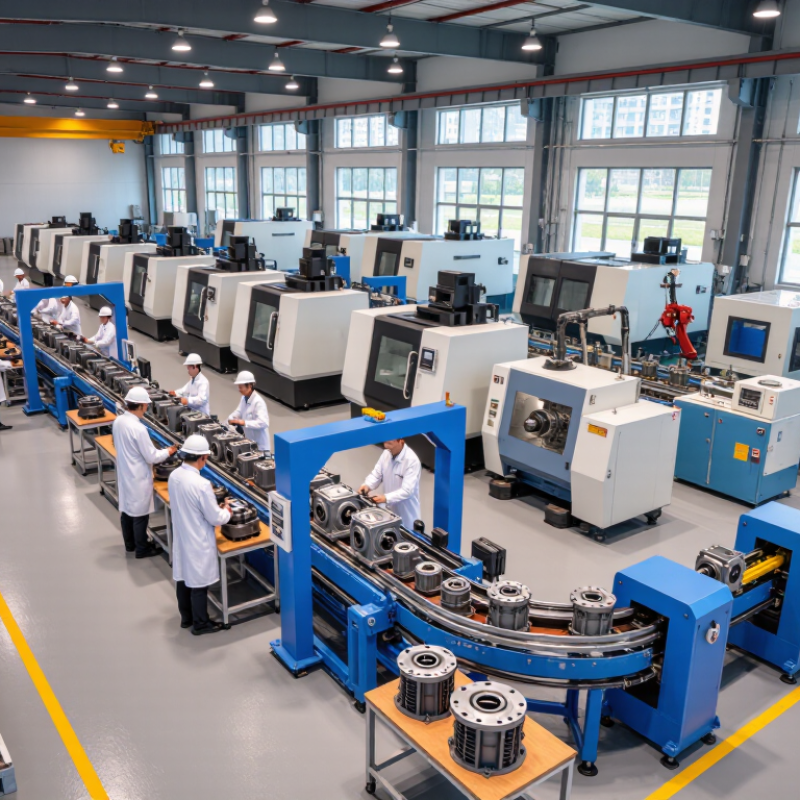
China Top 10 Custom Gear Motor Manufacturers?

What Are Custom Gear Motors and Why Are They Used?

Custom gear motors combine an electric motor with a gearbox designed for a specific machine. They deliver controlled speed, torque, and movement in limited spaces. Unlike standard units, their shaft, mounting holes, wiring, gear ratio, and housing can match one application. Engineers usually define voltage, output torque, operating time, noise limits, and environmental conditions before choosing a design. A small mismatch can cause overheating or unstable motion.

These motors serve conveyors, packaging equipment, automated gates, medical devices, agricultural machines, and adjustable furniture. At a packaging station, the motor may move a belt slowly while maintaining steady torque. In a compact device, a right-angle gearbox can save valuable space. Quiet gears matter near operators. Sealed housings help in dusty workshops, but sealing can also increase heat retention. Small details matter.

When evaluating Chinese manufacturers, buyers should request drawings, sample testing, torque curves, thermal data, and production traceability. A capable engineering team should explain gear materials, lubrication, bearing life, and tolerance limits in clear language. Customization is not automatically better. An oversized gearbox adds weight and cost, while an undersized motor may fail under repeated loads. The first specification is often incomplete. Real testing can reveal overlooked start-up torque, vibration, or heat. That feedback should change the design, even when the original plan seemed reasonable.

How to Evaluate China’s Custom Gear Motor Manufacturers

Evaluating China’s custom gear motor manufacturers requires more than comparing unit prices. The IEA estimates that electric motor systems consume roughly half of global electricity. Efficiency, therefore, affects both operating cost and carbon exposure. Ask each manufacturer for measured efficiency, rated torque, thermal limits, and test conditions. A polished catalogue is not evidence.

Check whether prototypes match your actual load cycle. Provide speed, duty time, starting torque, ambient temperature, shaft orientation, and allowable backlash. Then request a sample with dimensional drawings and a traceable test report. IEC 60034-30-1 defines motor efficiency classes, but the gearbox still influences total performance. Measure noise, vibration, temperature rise, and output torque after continuous operation. A 24-volt motor that survives a short bench test may still overheat inside a sealed enclosure.

Supplier control matters just as much. The U.S. Department of Energy’s Motor Systems Market Assessment places motor-driven equipment near one-quarter of U.S. electricity use. Small efficiency losses deserve serious attention. Review incoming inspection, winding records, gear material certificates, and corrective-action history. ISO 9001 certification helps, but it does not guarantee precise customization. I would also audit sample consistency across several production batches. No supplier gets every detail right. That is the uncomfortable part. Require clear tolerances, spare-part availability, and written responsibility for design changes. A factory willing to discuss failed tests may be more reliable than one promising perfect results.

How to Evaluate China’s Custom Gear Motor Manufacturers

Recommended evaluation weight by objective procurement criteria

This evaluation model prioritizes engineering customization, quality control, product testing, and production capability. Buyers should verify evidence such as drawings, prototype records, inspection reports, test procedures, traceability documents, and documented delivery performance before selecting a custom gear motor manufacturer.

China’s Top 10 Custom Gear Motor Manufacturers

China’s Top 10 Custom Gear Motor Manufacturers

China’s top ten custom gear motor manufacturers are best compared through engineering capability, not advertising claims. Strong suppliers usually support planetary, worm, helical, and spur gear designs. They should explain torque, speed, duty cycle, noise, and thermal limits clearly. A reliable factory can provide CAD drawings, load calculations, sample testing, and traceable inspection records. I would also check whether the production team understands your actual machine. A motor for a conveyor behaves differently from one used in a medical pump.

Custom work becomes clearer when you inspect the details. Ask about gear materials, shaft hardness, bearing selection, sealing methods, and backlash control. Request a prototype before approving volume production. Measure starting torque, operating temperature, vibration, and sound level under realistic loads. Certifications can support trust, but they do not replace test data. Some suppliers communicate well during sampling, then become vague after approval. That is a warning sign. My own selection process would include factory photos, process records, and direct technical discussions. Mistakes still happen, especially when drawings lack mounting tolerances.

Tips:

Prepare a complete specification sheet. Include voltage, rated torque, output speed, operating hours, installation space, and ambient temperature. Ask for a written test plan. Compare samples using the same load and power supply. Keep one approved sample for future production checks. Also, avoid choosing only by price. A cheaper gearbox may create higher costs through noise, early wear, or repeated redesigns.

What Products and Customization Services Do They Offer?

China’s top custom gear motor manufacturers typically supply compact, medium, and heavy-duty drive systems. Their product ranges include planetary, worm, helical, bevel, and spur gear motors. Small motors may power conveyor rollers, medical devices, or automated shutters. Larger units support packaging lines, mixers, lifting equipment, and agricultural machinery. Details matter.

Customization usually begins with torque, speed, voltage, duty cycle, and installation space. Engineers can modify gear ratios, shaft diameters, mounting holes, connectors, and brake systems. They may also design hollow shafts for direct installation. For harsh environments, suppliers can offer sealed housings, corrosion-resistant coatings, and high-temperature insulation. Some provide encoder integration, cable assemblies, and control testing. A reliable supplier should share drawings, test data, and sample results before mass production.

In technical reviews, ask how prototypes are tested under real load. Samples should be checked for noise, backlash, temperature rise, and vibration. One overlooked issue is starting torque. It can exceed the running requirement by a wide margin. Lead times and minimum order quantities also influence the final design. A perfect specification rarely exists at the beginning. I would request two or three prototype revisions before approving production. Small changes in bearing selection or grease can affect service life considerably. Supplier communication remains important, especially when drawings change late.

China Top 10 Custom Gear Motor Manufacturers? - What Products and Customization Services Do They Offer?

The table below summarizes ten representative manufacturer profiles in China's custom gear motor sector. The specifications describe commonly available product ranges and engineering services rather than a company ranking. Exact performance, materials, certifications, and production capabilities should be confirmed through technical drawings and formal quotations.

No. Manufacturer Profile Primary Gear Motor Products Typical Output Range Common Voltage Options Gearbox Types Customization Services Typical Applications Quality and Compliance Support
01 Representative Manufacturer A DC gear motors Planetary gear motors Approx. 6–90 mm motor frame sizes; torque commonly from below 0.1 N·m to about 50 N·m 3 V, 6 V, 12 V, 24 V, and 48 V DC Planetary and spur gearboxes Shaft geometry, gear ratio, winding, connector, encoder, mounting flange, cable length, and output bearing configuration Robotics, laboratory equipment, medical devices, small automation systems Inspection reports, material documentation, functional testing, and export compliance support
02 Representative Manufacturer B AC gear motors Helical gear motors Approx. 0.12–15 kW; common output torque range from about 5 N·m to 3,000 N·m Single-phase and three-phase 110 V, 220 V, 230 V, 380 V, and 400 V systems Helical, parallel-shaft, and helical-bevel gearboxes Motor power, reduction ratio, mounting position, shaft arrangement, brake, thermal protection, and terminal-box configuration Conveyors, packaging lines, material handling, food-processing machinery Routine electrical testing, IP protection options, efficiency data, and dimensional inspection
03 Representative Manufacturer C Worm gear motors Right-angle gear motors Approx. 6–90 mm frame sizes for compact units; output torque commonly up to about 1,000 N·m 12 V, 24 V, 48 V DC and 110–400 V AC configurations Worm, helical-worm, and right-angle gearboxes Self-locking requirement, ratio selection, housing material, shaft direction, flange size, brake, and customized mounting holes Valve actuators, lifting equipment, conveyors, gates, and positioning mechanisms Backlash measurement, no-load testing, noise testing, and enclosure protection verification
04 Representative Manufacturer D Brushless DC gear motors Encoder gear motors Approx. 20–110 mm diameter; typical continuous output power from 10 W to 1.5 kW 12 V, 24 V, 36 V, and 48 V DC Planetary, spur, and low-backlash gearboxes Hall sensors, incremental or absolute encoder, controller matching, winding design, gear ratio, noise reduction, and connector selection AGVs, service robots, pumps, fans, automated doors, and mobile equipment Speed-torque curves, insulation testing, encoder verification, vibration testing, and sample validation
05 Representative Manufacturer E Servo gear motors Precision planetary gear motors Approx. 50 W–5 kW; rated output torque commonly from 10 N·m to 800 N·m 24 V, 48 V, 220 V, and 380 V motor systems Precision planetary and low-backlash helical gearboxes Backlash target, torsional stiffness, flange and shaft standards, encoder interface, brake, thermal sensor, and servo-drive matching Machine tools, semiconductor equipment, pick-and-place systems, industrial robots Backlash and torsional-stiffness reports, dynamic testing, run-in testing, and traceable inspection records
06 Representative Manufacturer F Miniature gear motors Micro metal gear motors Approx. 6–42 mm diameter; typical speed range from 5 to 2,000 rpm after reduction 1.5 V, 3 V, 6 V, 9 V, 12 V, and 24 V DC Metal spur and planetary gearboxes Micro shaft, custom gear ratio, terminal or wire connection, motor winding, plastic or metal housing, and compact mounting design Consumer devices, smart locks, toys, optical equipment, small pumps Dimensional sampling, current and speed testing, endurance testing, and small-batch quality control
07 Representative Manufacturer G Induction gear motors Brake gear motors Approx. 0.09–7.5 kW; output torque commonly from 3 N·m to 1,500 N·m Single-phase 110–240 V and three-phase 220–480 V options Helical, worm, and parallel-shaft gearboxes Electromagnetic brake, voltage and frequency, shaft extension, foot or flange mounting, paint system, and cooling arrangement Industrial doors, hoists, conveyors, mixers, and production machinery Brake holding tests, insulation resistance testing, thermal-rise testing, and ingress-protection options
08 Representative Manufacturer H Stainless-steel gear motors Washdown gear motors Approx. 0.12–4 kW; output torque commonly from 10 N·m to 800 N·m 24 V, 48 V, 220 V, 230 V, 380 V, and 400 V systems Helical, worm, and stainless-steel planetary gearboxes Stainless-steel housing, food-grade lubricant, hygienic shaft seal, washdown design, cable gland, surface finish, and mounting style Food processing, beverage equipment, pharmaceutical machinery, and clean production areas Corrosion-resistance documentation, sealing inspection, hygienic-design review, and washdown validation
09 Representative Manufacturer I High-torque gear motors Heavy-duty gear motors Approx. 0.37–30 kW; output torque commonly from 100 N·m to 8,000 N·m Three-phase 220 V, 380 V, 400 V, 415 V, and 460 V configurations Helical-bevel, parallel-shaft, and heavy-duty planetary gearboxes Load profile analysis, custom ratio, reinforced bearings, hollow or solid shaft, cooling system, brake, and mounting structure Mining machinery, cranes, mixers, industrial conveyors, and heavy material handling Load testing, vibration analysis, oil-temperature monitoring, gear-contact inspection, and spare-parts support
10 Representative Manufacturer J Integrated gear motor systems Smart gear motors Approx. 50 W–3 kW; speed control typically from low-speed positioning to about 3,000 rpm 24 V, 48 V, 110 V, 220 V, and 380 V systems Planetary, helical, worm, and harmonic-style precision reduction systems Integrated controller, communication interface, encoder, software parameters, regenerative braking, custom housing, and system-level commissioning Warehouse automation, AGVs, robotics, smart logistics, and automated production lines System integration testing, parameter backup, EMC testing support, lifecycle testing, and technical documentation

How to Select the Right Manufacturer for Your Project

China Top 10 Custom Gear Motor Manufacturers?

How to Select the Right Manufacturer for Your Project

Choosing a custom gear motor manufacturer requires more than comparing unit prices. Start with the application: required torque, speed range, duty cycle, voltage, noise limit, and installation space. A useful supplier should ask these questions before offering a quotation. If the first reply contains only a low price, be cautious.

Review engineering evidence carefully. Request motor curves, gearbox drawings, tolerance data, material specifications, and sample test reports. Ask how the manufacturer checks gear wear, shaft alignment, temperature rise, and vibration. Reliable factories usually explain their inspection equipment clearly. They should also provide traceable production records and realistic lead times. Do not accept vague claims about “high quality.”

Communication matters during customization. Can the engineering team revise a drawing quickly? Will they identify a weak gear, undersized bearing, or cooling problem? A factory with machining, winding, assembly, and testing capabilities may control quality more effectively. However, vertical integration is not automatically better. I have seen impressive workshops with poor documentation. That detail changed my evaluation.

Order prototypes before approving mass production. Test them under your real load, including start-stop cycles and possible overload conditions. Confirm packaging, spare parts, warranty terms, and after-sales response in writing. Visit the facility when practical, or arrange a live video audit. Trust grows through evidence, not polished photographs. Expect some design changes; custom projects rarely become perfect on the first attempt.

FAQS

What is a custom gear motor?

It combines an electric motor with a gearbox designed for one machine. Its shaft, mounting holes, wiring, housing, and gear ratio can match limited spaces. It controls speed, torque, and movement. Small differences matter.

Where are custom gear motors commonly used?

They operate conveyors, packaging machines, automated gates, agricultural equipment, and adjustable furniture. A belt may move slowly while maintaining steady torque. Right-angle gearboxes can save space inside compact equipment. Quiet operation helps near workers.

What specifications should buyers prepare?

Include voltage, output torque, speed, duty cycle, operating hours, and installation space. Also record ambient temperature, noise limits, and expected load changes. A complete specification sheet reduces misunderstandings. The first version may be incomplete.

How can buyers evaluate a manufacturer?

Request drawings, torque curves, thermal data, material details, and inspection records. Ask how the team checks gear wear, shaft alignment, vibration, and temperature rise. Clear technical answers matter more than polished photographs. Evidence builds trust.

Why are prototype tests important?

Prototypes reveal starting torque, heat retention, vibration, noise, and unstable motion. Test them with the real load, power supply, and start-stop cycles. Keep one approved sample for later comparisons. Real testing matters.

What design problems can occur during customization?

An undersized motor may overheat under repeated loads. An oversized gearbox can add unnecessary weight, cost, and slower response. Sealed housings protect against dust but may retain more heat. Details can change.

How should buyers compare samples?

Use the same load, voltage, operating time, and measurement method for every sample. Record temperature, sound level, vibration, starting torque, and output speed. Compare results against written limits, not informal promises. Price is not enough.

What should be confirmed before volume production?

Confirm final drawings, mounting tolerances, test plans, packaging, spare parts, warranty terms, and response procedures. Review production traceability and inspection records. Expect some design changes after testing. Perfection rarely arrives immediately.

Conclusion

This guide explores what a Custom Gear Motor is and why it is widely used in automation, robotics, medical equipment, packaging, material handling, and other applications that require compact size, controlled speed, and reliable torque. It explains how integrated motors and gear systems can be tailored to meet specific load, speed, noise, efficiency, and installation requirements.

The article also presents a practical framework for evaluating China’s top 10 custom gear motor manufacturers without focusing on brand names. It reviews their product capabilities, including planetary, worm, spur, helical, and other geared motor solutions, as well as customization services such as shaft design, housing dimensions, voltage, connectors, gearing ratios, materials, and testing. Finally, it offers guidance for selecting the right manufacturer by comparing engineering expertise, quality control, production capacity, communication, sample support, certifications, lead times, and long-term service, helping project teams make a confident and suitable sourcing decision.

Amelia

Amelia

Amelia is a seasoned marketing professional with a wealth of expertise in our company’s core offerings. With an unwavering passion for driving growth and innovation, she plays a pivotal role in shaping our marketing strategies and enhancing brand visibility. A key aspect of her responsibilities......