Choosing a Compact Gear Motor in 2026 is not simply a matter of selecting the smallest available unit. The motor must deliver reliable torque, controlled speed, acceptable noise, and stable performance inside a restricted space.
The International Energy Agency reports that electric motor systems consume nearly half of global electricity. In industrial facilities, motor-driven equipment can represent about 70% of electricity use. These figures make efficiency more than a specification. It becomes an operating-cost decision. The U.S. Department of Energy’s motor-system guidance also stresses correct sizing, efficient controls, and reduced mechanical losses. A compact design can save valuable space, yet a poorly sized gearbox may create heat, vibration, and premature wear.
Sami Atiya, President of ABB’s Motion business, has stated, “Energy efficiency begins with the complete system, not the motor alone.” That principle applies directly to Compact Gear Motor selection. Buyers should examine load torque, duty cycle, starting conditions, shaft orientation, backlash, enclosure rating, and thermal limits. A conveyor moving small cartons may need steady torque rather than impressive peak speed. A medical actuator may demand quiet operation and precise positioning.
Small does not mean simple.
Real installations often expose overlooked details. Dust enters through an unsuitable seal. A gearbox runs hot because the duty cycle was underestimated. I have also seen catalog ratings treated as guaranteed field performance, which is an unsafe assumption. This guide examines the practical criteria, test data, and supplier questions needed to choose a Compact Gear Motor with greater confidence in 2026.
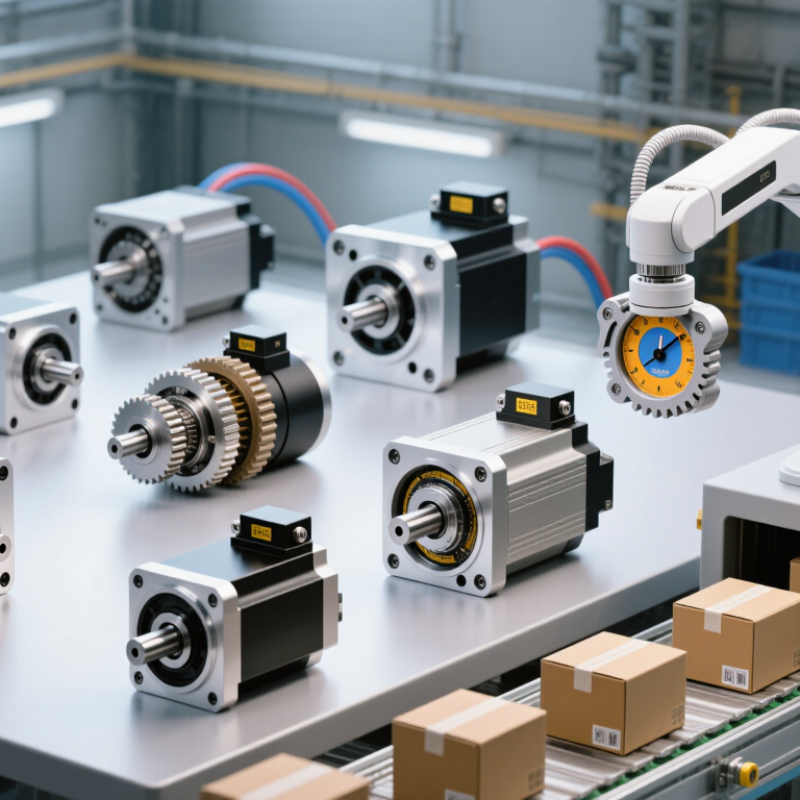
Define Load, Speed, and Duty Using IEC 60034-1 Operating Classes
How to Choose a Compact Gear Motor in 2026?
A compact gear motor should be sized from real operating conditions, not catalogue speed alone. IEC 60034-1 defines duty types from S1 continuous duty to S10 duties with variable loads and speeds. This classification matters because a motor carrying 8 Nm for ten seconds differs from one carrying 8 Nm continuously. Record conveyor mass, friction, acceleration time, starts per hour, and shaft speed. Measure where possible. Estimates can mislead.
Start with load torque and required output speed. Then check gearbox ratio, service factor, thermal limits, and radial loads. For a machine cycling every minute, S3 intermittent periodic duty may fit better than S1. A fan running all day usually needs S1 evaluation. IEC 60034-1 also requires attention to temperature rise, insulation, and rated conditions. Small housings have little thermal forgiveness. Heat remains trapped.
The International Energy Agency’s Energy Efficiency 2024 report states that electric motor systems consume roughly half of global electricity. That makes duty selection an energy decision, not only a mechanical one. The U.S. Department of Energy’s Motor Systems Market Assessment also identifies pumps, fans, compressors, and material handling as major motor-system applications. Their loads rarely stay constant. A compact design may save space, yet a poorly matched duty class can increase heating and maintenance. I have seen calculations fail because start-up torque was ignored. That mistake is easy to repeat. Recheck acceleration, stopping cycles, ambient temperature, and actual mounting orientation before approval.
Calculate Output Torque with T = 9550P/n and a 1.2–1.5 Service Factor
For compact gear motor selection, output torque should be calculated before comparing dimensions or mounting options. Use T = 9550P/n. T means torque in newton-metres. P is power in kilowatts. n is speed in revolutions per minute. For example, a 0.25 kW motor running at 60 rpm produces about 39.8 Nm. Keep units consistent. This equation estimates continuous torque, not every real operating demand.
Apply a service factor of 1.2 to 1.5 for starts, brief overloads, shock, and uncertain duty conditions. In this example, design torque becomes 47.8 to 59.7 Nm. A smooth indexing table may suit 1.2. A frequently starting conveyor may need 1.5. Check the gearbox’s rated output torque, not only motor power. Also verify thermal capacity, backlash, radial load, shaft arrangement, noise, and installation space.
Measure the actual load when possible. A spring scale, tachometer, and current reading can expose assumptions hidden in a spreadsheet. I have seen compact drives fit perfectly, then stall during cold starts. That mistake was not in the formula. It was in the duty estimate. Recheck acceleration time, starts per hour, braking, and ambient temperature. A smaller motor may look efficient on paper, yet repeated peaks can shorten its service life. Leave clearance for wiring and maintenance. It is easy to overlook.
How to Choose a Compact Gear Motor in 2026? - Calculate Output Torque with T = 9550P/n and a 1.2–1.5 Service Factor
Selection basis: Output torque is calculated from the rated mechanical output power using
T = 9550P/n, where T is torque in N·m, P is power in kW, and
n is output speed in r/min. The design torque equals calculated torque multiplied by the selected service factor.
Selection
Reference |
Typical Application |
Rated Output
Power (kW) |
Output Speed
(r/min) |
Calculated Torque
T = 9550P/n (N·m) |
Service
Factor |
Design Torque
(N·m) |
Typical Gear
Ratio |
Approx. Housing
Size (mm) |
Recommended Use Conditions |
| A |
Small conveyor or indexing table |
0.09 |
30 |
28.65 |
1.20 |
34.38 |
50:1 |
90 × 90 × 180 |
8 hours/day, smooth load, low starting frequency |
| B |
Packaging roller or light material feeder |
0.12 |
45 |
25.47 |
1.25 |
31.84 |
33:1 |
100 × 100 × 205 |
Intermittent duty, moderate starts, limited impact loading |
| C |
Compact mixer or small rotary actuator |
0.18 |
60 |
28.65 |
1.30 |
37.25 |
25:1 |
120 × 120 × 235 |
Continuous duty with variable material resistance |
| D |
Elevating mechanism or compact screw drive |
0.25 |
90 |
26.53 |
1.40 |
37.14 |
17:1 |
135 × 135 × 270 |
Frequent starts and stops, moderate shock or reversing load |
| E |
Compact conveyor with heavier product loads |
0.37 |
120 |
29.45 |
1.50 |
44.17 |
12:1 |
160 × 160 × 315 |
Long operating hours, high inertia, or regular overloads |
| F |
Small hoist, turntable, or high-load drive |
0.55 |
150 |
35.02 |
1.50 |
52.53 |
9:1 |
180 × 180 × 355 |
Heavy intermittent duty, high inertia, or frequent shock loads |
Important sizing note: The design torque is a preliminary selection value. Confirm gearbox efficiency, thermal capacity,
allowable overhung and axial loads, brake requirements, duty cycle, starting torque, ambient temperature, mounting position, and actual load profile before finalizing the gear motor.
Compare Gear Types, Ratios, and Efficiency Classes IE3–IE4
How to Choose a Compact Gear Motor in 2026?
Compact gear motors now demand more than a small footprint. The motor and gearbox must be evaluated separately. Helical gears suit continuous conveyors because they offer high efficiency and quiet operation. Worm gears are compact and inexpensive, but their sliding contact can create greater heat. Planetary gears provide high torque density, especially where installation space is limited. However, their higher cost may not suit simple machinery.
Ratio selection starts with the driven load, not the catalogue. A 20:1 ratio can reduce speed effectively, but it may increase output torque and thermal stress. Check starting torque, duty cycle, shock loads, and back-driving risk. I have seen machines fail early because engineers matched rated speed while ignoring frequent starts. That mistake is expensive.
IE3 and IE4 describe motor efficiency classes under IEC 60034-30-1; they do not measure gearbox losses. The International Energy Agency reports that electric motors and related systems consume roughly 45% of global electricity. Even small efficiency gains matter at scale. The European Commission’s ecodesign assessments also identify motor-system optimization as a major energy-saving opportunity. IE4 can reduce motor losses compared with IE3, but the benefit depends on load profile, speed, and operating hours. Do not assume IE4 always pays back quickly. Measure real duty conditions. Then compare total energy, heat, noise, service access, and purchase cost before choosing the smallest package.
How to Choose a Compact Gear Motor in 2026?
Typical mechanical efficiency by gear type and reduction ratio. Values represent realistic midpoints for properly lubricated gearboxes operating near rated load; actual results vary with size, speed, temperature, and maintenance.
How to read the chart: Helical and spur gearboxes generally provide the highest efficiency for compact applications. Bevel-helical units offer efficient right-angle transmission, while worm gearboxes are more compact and economical at high reduction ratios but typically lose more energy as the ratio increases.
IE3 vs IE4: IE3 and IE4 are motor efficiency classes defined for the electric motor, not the gearbox. IE4 motors normally use less electrical energy than IE3 motors under comparable operating conditions, but the exact efficiency depends on motor power, speed, frequency, and load. For total drive efficiency, evaluate both the motor class and gearbox efficiency.
Verify Thermal, Insulation, and IP Ratings Under IEC 60034 and 60529
Choosing a compact gear motor in 2026 requires more than checking torque and speed. Thermal performance can decide whether the unit survives a crowded machine enclosure.
The U.S. Department of Energy’s 2022 Motor Systems Market Assessment reports that motor-driven equipment consumes about 68% of industrial electricity in the United States. Efficiency matters. Heat matters more when space is limited. Under IEC 60034-1, verify rated duty, ambient temperature, temperature rise, and service conditions. Do not assume a small frame stays cool. A 40°C ambient limit may become unsafe beside a brake, heater, or sealed gearbox. Check the insulation thermal class, winding temperature, and inverter compatibility. IEC 60034-18-41 is especially relevant for motors supplied by variable-frequency drives.
Protection ratings need equal attention. IEC 60034-5 and IEC 60529 define the basis for IP classification. An IP65 motor resists dust and water jets, but it is not automatically suitable for high-pressure washdown. IP ratings describe enclosure protection, not corrosion resistance, shaft-seal life, or cable-gland quality. The IEA has reported that electric motor systems consume roughly half of global electricity, so small design errors can multiply across production lines. Request test conditions, not only a printed IP code. A datasheet can still mislead. Review mounting position, condensation risk, duty cycle, and actual cleaning practices. Then test the selected motor under its hottest realistic load, because laboratory assumptions rarely match a sealed machine cabinet.
Check Bearing L10 Life, Noise, and Controls Using ISO 281 and IEC 60034-9
Choosing a compact gear motor in 2026 starts with bearing life, not only torque and size.
ISO 281 defines L10 life as the point when 10% of identical bearings may fail. The remaining 90% should survive longer. Calculate it from dynamic load rating, equivalent bearing load, and operating speed. Include radial loads from belts, chains, or offset gears. A small housing can hide serious side loads. Check lubrication and contamination too. Clean conditions are rarely permanent.
Noise needs a separate measurement.
IEC 60034-9 provides sound limits and test methods for rotating electrical machines. It does not explain every gearbox sound. Measure the complete motor assembly at a fixed distance, speed, load, and mounting condition. Record tonal noise, rattling, and vibration near the output shaft. A quiet no-load sample may become harsh under load. That surprised me during a workshop evaluation.
Controls can change both life and noise.
PWM drives may create audible whine, bearing currents, or uneven low-speed motion. Select a compatible frequency, ramp, feedback device, and thermal protection method. Check whether the controller limits starting current without reducing useful torque. Test repeated starts, reversals, and stalled conditions. Do not trust one short demonstration. My own selection process still misses details when mounting stiffness changes. That is worth reviewing before approval.
FAQS
Record load torque, speed, acceleration time, starts per hour, and ambient temperature. Continuous operation may require S1 duty. Repeated short cycles may suit S3 duty. Do not rely on catalogue speed alone. Measure it.
Use T = 9550P/n. T is torque in newton-metres, P is power in kilowatts, and n is rpm.
Apply about 1.2 to 1.5 for starting loads, shocks, and uncertain conditions. A smooth indexing table may use 1.2. A frequently starting conveyor may need 1.5. Do not size from continuous torque only.
Check rated output torque, thermal capacity, backlash, radial load, and shaft arrangement. Also confirm mounting space and wiring clearance. A compact housing can fit physically but fail mechanically. Small spaces punish oversights.
Use a spring scale, tachometer, and current measurement when possible. Measure during acceleration, stopping, and cold starts. A spreadsheet may look correct. The machine may disagree.
Check duty cycle, ambient temperature, temperature rise, insulation class, and mounting orientation. A sealed cabinet can trap heat beside a brake or heater. Test the motor under its hottest realistic load. Heat has nowhere to go.
An IP rating describes enclosure protection against dust and water entry. For example, IP65 resists dust and water jets under defined conditions. It does not guarantee corrosion resistance or long seal life. Review cleaning pressure, condensation, and cable-gland quality.
Recheck acceleration, braking, starts per hour, ambient temperature, and actual mounting position. Verify inverter compatibility when variable-frequency operation is used. Leave room for maintenance access. The first estimate may be wrong.
Conclusion
Choosing the right Compact Gear Motor in 2026 starts with matching the motor to the application’s real operating conditions. Define the load, required speed, starting frequency, and duty cycle according to IEC 60034-1 operating classes. Calculate the required output torque using T = 9550P/n, then apply a practical service factor of 1.2–1.5 to accommodate startup loads, shock, and future variation. Compare gear types and reduction ratios based on torque delivery, size, backlash, efficiency, and maintenance needs, while considering IE3–IE4 efficiency levels for lower energy consumption.
Before final selection, verify thermal performance, insulation class, and enclosure protection under IEC 60034 and IEC 60529. A reliable choice should also provide suitable bearing L10 life based on ISO 281, acceptable noise performance under IEC 60034-9, and compatible control features such as variable-speed operation or soft starting. By evaluating mechanical, electrical, thermal, and control requirements together, users can select a compact motor solution that delivers dependable performance, efficient operation, and a long service life.
 DC Motor B2B
