Servo vs Stepper Motor which is best for your project?

Time:2026-08-01 Author:Ethan
0%

When choosing between Servo and Stepper Motor, it's essential to understand their distinct features. Both types serve different project needs, yet the decision isn't always straightforward. Industry reports highlight that Servo motors are often more efficient in high-torque applications, while Stepper motors excel in precision tasks. According to renowned motion control expert Dr. Emily Chen, "The choice between Servo and Stepper Motor hinges on the specific requirements of your application."

Servo motors typically offer closed-loop control, enhancing performance in dynamic scenarios. They usually come at a higher price due to their complex design. On the other hand, Stepper motors provide a cost-effective solution with open-loop control, making them ideal for simpler projects. However, they can struggle with overheating and missed steps in demanding environments.

Choosing the right motor type requires careful analysis of project goals. Some may favor the precision of a Stepper, while others might need the power and speed of a Servo. Reflecting on these differences is crucial for successful implementation. The Servo/Stepper Motor landscape is nuanced, and developing a comprehensive understanding can greatly enhance project outcomes.
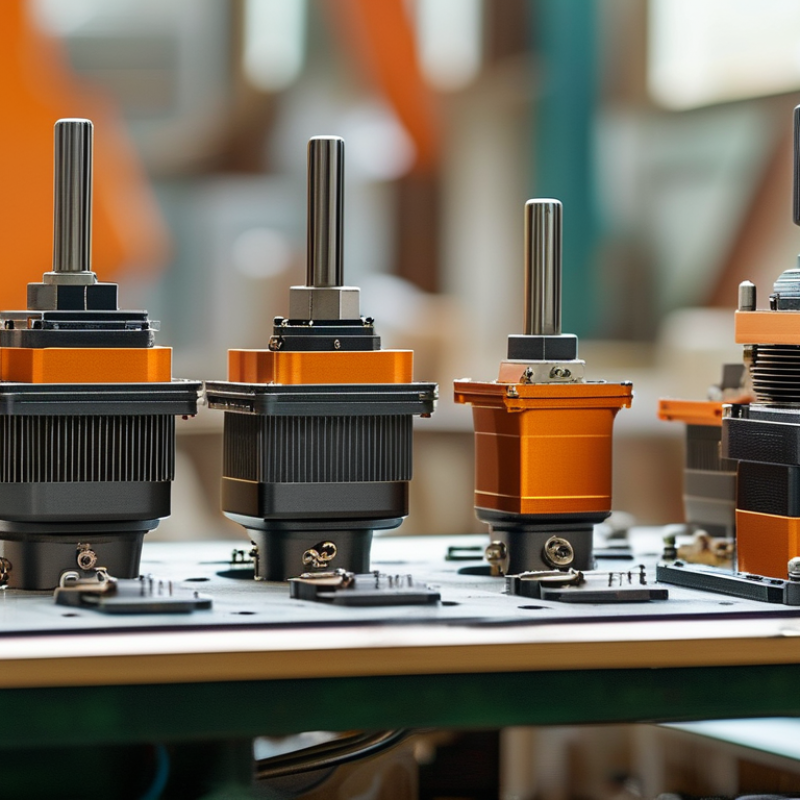
Servo vs Stepper Motor which is best for your project?

Types of Motors: An Overview of Servo and Stepper Motors

Servo and stepper motors are crucial components in robotics and automation. Understanding their differences is essential for making the best choice for your project. Stepper motors are known for their precise movement control. They divide a full rotation into several steps. Research indicates that stepper motors can reach up to 200 steps per revolution. This feature is beneficial for applications requiring accuracy.

On the other hand, servo motors excel in speed and torque. They operate based on feedback systems, ensuring high efficiency. According to industry reports, servo motors can provide torque three times greater than that of comparable stepper motors. This capability is vital in high-performance applications, such as CNC machines and robotic arms. However, it’s worth noting that the complexity of servo systems can lead to challenges in initial setup.

When choosing between them, consider your specific needs. Are you prioritizing precision or power? While stepper motors are generally easier to control, their performance can decline under load. Conversely, servo motors may require more expertise to implement. Thus, evaluating these factors will help you make an informed decision tailored to your project.

Key Differences Between Servo Motors and Stepper Motors

When choosing between servo and stepper motors, understanding their key differences is crucial. Servo motors are designed for precision. They provide closed-loop control, which means they can adjust their position based on feedback. This feature allows for high accuracy in applications like robotics or CNC machines. The motor receives information about its current position and corrects itself as needed.

In contrast, stepper motors operate on open-loop control. They move in defined steps but lack feedback mechanisms. This can lead to missed steps in high-stress applications. However, stepper motors are simpler and cheaper. They are often used in 3D printers and small automation tasks. A project requiring less complexity may benefit from this simplicity.

Yet, there are situations where neither option seems perfect. A servo motor may be too complex for basic tasks, and a stepper motor might struggle under heavy loads. Consider the specific needs of your project. Knowing the distinctions aids in making an informed choice. This knowledge reflects experience and showcases different project demands.

Advantages of Using Servo Motors in Projects

Servo motors offer several advantages that make them highly suitable for various projects. They excel in applications requiring precise motion control. This precision is a result of their feedback systems, which ensure accurate position and velocity. For instance, in robotics, servo motors can accurately position an arm or a joint. This is vital for tasks like assembly, where small misalignments can lead to failures.

Another key benefit of servo motors is their efficiency. They can deliver high torque at relatively low speeds. This efficiency translates into less energy consumption compared to stepper motors. Projects that involve continuous operation can see significant energy savings over time. Additionally, the compact design of servo motors makes them easier to integrate into tight spaces.

However, it's essential to consider the complexity of implementing servo systems. They often require sophisticated control systems and programming expertise. This could be overwhelming for beginners. Additionally, while servo motors provide excellent performance, their initial cost can be higher than simpler alternatives. Understanding these aspects will help in making an informed decision while selecting motors for your project.

Advantages of Using Stepper Motors in Projects

Stepper motors are widely recognized for their precise control and reliability in various applications. Their design allows them to divide a full rotation into equal steps. This feature makes them ideal for projects requiring accurate positioning. For example, in robotics, stepper motors guide the movements of mechanical arms or wheels.

Another key advantage is their straightforward control method. They can be easily controlled by simple electronic circuits. This accessibility appeals to hobbyists and engineers alike. With a relatively low cost, stepper motors are an appealing choice for educational projects. However, they can struggle with higher speeds and may lose steps under load, which is a critical factor to consider.

When it comes to torque, stepper motors provide excellent performance at low speeds. This characteristic allows them to handle tasks that require holding heavy objects in place. Nevertheless, they may require tuning to optimize performance. Users must carefully consider their project's demands. Balancing the needs for precision, speed, and weight capacity can be challenging but ultimately rewarding.

Factors to Consider When Choosing Between Servo and Stepper Motors

When deciding between servo and stepper motors for your project, understanding the factors at play is key. One critical aspect is precision. Stepper motors excel in open-loop systems. They provide precise control of position, making them ideal for applications like 3D printers and CNC machines. Research indicates that stepper motors can achieve a step resolution of 1.8 degrees without additional feedback systems.

Conversely, servo motors are better suited for applications requiring torque and speed. They utilize feedback loops to ensure responsiveness, perfect for robotics. According to industry reports, servo motors can deliver up to 20 times the torque of stepper motors of similar size. However, they require more complex setups, often incurring higher initial costs.

Another factor is heat generation. Stepper motors tend to overheat during prolonged use, potentially leading to performance degradation. On the other hand, servo motors manage heat more effectively, which can prolong their lifespan. It's essential to weigh these details against your specific needs and budget constraints. Think about the trade-offs before making a choice, as the right motor can significantly impact your project's success.

FAQS

: What is the primary advantage of servo motors?

: Servo motors provide precision and closed-loop control, ensuring high accuracy based on real-time feedback.

How do stepper motors operate differently?

Stepper motors use open-loop control, moving in defined steps without feedback, which can lead to missed steps.

Can stepper motors be used for high-load applications?

No, stepper motors may struggle under heavy loads, making them less suitable for such tasks.

What type of projects benefit from stepper motors?

Projects like 3D printers and small robotics often benefit from the simplicity and cost-effectiveness of stepper motors.

Why might servo motors be seen as too complex?

Servo motors require more complex setups, which may not be necessary for basic tasks needing less precision.

Are stepper motors energy-efficient?

Stepper motors can overheat during extended use, which might degrade their performance over time.

What is a critical factor when choosing a motor?

Precision and the specific demands of your project play crucial roles in the decision-making process.

How do servo motors handle heat?

Servo motors manage heat better than stepper motors, potentially extending their operational lifespan.

Can users balance torque and speed with stepper motors?

Balancing torque and speed can be challenging but is vital for project success when using stepper motors.

Do all projects require high-performance motors?

Not all projects need high-performance motors; sometimes, basic motors suffice depending on the application needs.

Conclusion

When selecting a motor for your project, understanding the differences between servo and stepper motors is crucial. Servo motors offer precise control and high torque, making them ideal for applications requiring rapid response and smooth movements. They are particularly advantageous in scenarios where positioning accuracy is essential. On the other hand, stepper motors provide excellent holding torque and are simpler to control, which makes them suitable for applications that require incremental movements.

Choosing between a servo and stepper motor involves considering several factors, including torque requirements, speed, and the complexity of the control system. Ultimately, the best choice depends on the specific needs of your project, such as whether accuracy or ease of control is more critical. By weighing the advantages of each motor type, you can make an informed decision that aligns with your project's goals.

Ethan

Ethan

Ethan is a seasoned marketing professional with a deep expertise in our company's innovative product line. With a passion for sharing knowledge and insights, he takes the lead in regularly updating our corporate blog, where he explores industry trends, product features, and effective marketing......