Top 10 High Torque Gear Motors for Industrial Use?

Time:2026-09-15 Author:Aria
0%

Selecting the right High Torque Gear Motor can determine whether an industrial machine runs smoothly or struggles under pressure. In factories, torque requirements rarely remain constant. Conveyors start with loaded pallets, mixers face thick materials, and lifting systems endure sudden resistance. A motor that performs well during testing may overheat during continuous production.

This guide examines ten high torque gear motors designed for demanding industrial use. Each option deserves evaluation beyond its advertised torque rating. Engineers should compare output speed, gearbox ratio, duty cycle, motor efficiency, thermal capacity, backlash, noise, and mounting compatibility. Environmental protection also matters when dust, moisture, chemicals, or frequent washdowns are present. An IP rating helps, but it does not replace a complete application review.

Real-world reliability depends on more than specifications. Housing strength, bearing quality, lubrication access, replacement parts, and technical support can affect operating costs. Documentation should clearly state rated torque, peak torque, service factor, and expected operating conditions. That detail builds confidence.

Torque matters. But peak torque alone can mislead.

A practical selection process also considers startup frequency and stopping accuracy. An oversized motor may waste energy and create unnecessary mechanical stress. An undersized unit may fail prematurely. This ranking is therefore not an absolute verdict. Application conditions differ, and supplier claims require careful verification. The featured models represent strong candidates, yet engineers should confirm performance through datasheets, load calculations, and controlled testing before installation. Reliability is earned in service, not promised in a brochure.
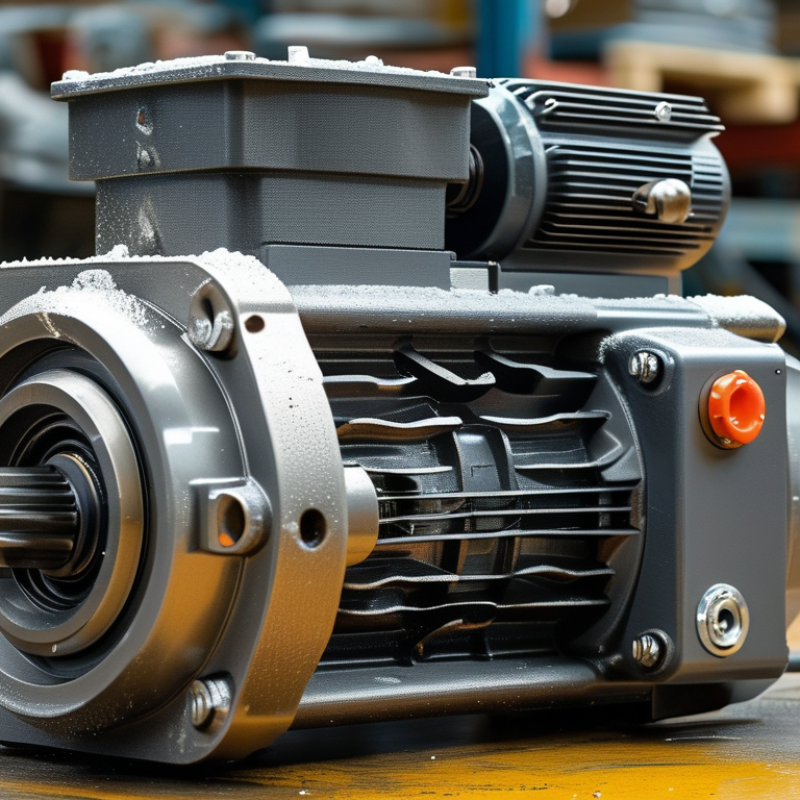
Top 10 High Torque Gear Motors for Industrial Use?

What High-Torque Gear Motors Are and How They Work

High-torque gear motors combine an electric motor with a reduction gearbox. The motor spins quickly, while the gears reduce speed and multiply output torque. This makes them suitable for conveyors, lifting tables, mixers, and automated positioning systems. When comparing the top 10 high-torque gear motors for industrial use, examine rated torque, speed range, duty cycle, and mounting dimensions. A larger motor does not always deliver better results. Gear ratio matters more than many buyers expect.

In practical installations, I check the load’s starting torque, not only its running torque. A conveyor may move smoothly but demand far more power when fully loaded. Gear teeth transfer force through several stages, creating useful mechanical advantage. However, friction, heat, noise, and backlash reduce real-world performance. I have seen motors selected by torque alone overheat during repeated starts. That mistake is easy to make.

Tips: Measure the actual load. Leave thermal capacity. Confirm shaft alignment and gearbox lubrication. Choose sealed protection for dusty or damp areas. Check brake requirements separately. A motor can feel powerful but still stall under sudden impact. Test the system at low speed before reaching full production. Record temperature, vibration, and current during testing. Some assumptions fail. Use measured data whenever possible.

Top 10 High-Torque Gear Motors for Industrial Use

High-torque gear motors combine an electric motor with a gearbox to reduce speed and increase usable output torque. The chart compares representative maximum continuous output-torque classes commonly found in industrial gearmotor configurations.

Torque values are representative industrial catalog ratings in newton-metres (N·m). Actual capacity depends on gearbox size, ratio, duty cycle, lubrication, service factor, and operating speed.

Key Performance Factors for Selecting Industrial Gear Motors

Selecting a high-torque gear motor starts with the real load, not the catalog’s maximum figure. Measure starting torque, running torque, speed, acceleration time, and shock loads. A conveyor carrying uneven boxes may need much more starting torque than its steady operation suggests. Leave a practical service margin, but avoid excessive oversizing. It can increase cost, heat, and energy consumption.

Duty cycle matters. A motor running continuously needs different thermal capacity than one operating for ten seconds per minute. Check gearbox efficiency, allowable radial and axial loads, backlash, and rated output speed. For precise positioning, low backlash may matter more than peak torque. For dusty or wet areas, verify the enclosure rating and shaft-seal design. Small details matter.

Mounting alignment deserves attention. Even a strong gearbox can fail early when the coupling is offset or the base flexes. I have seen vibration blamed on the motor when the real problem was poor shaft alignment. Check lubrication requirements, inspection access, brake response, and replacement-part availability. Control compatibility is also important, especially when using variable-speed drives. Confirm voltage, current, feedback, and overload settings before installation. A spreadsheet helps, but it can still miss real shock loads. Test the selected unit under representative conditions, then review noise, temperature, and current draw after several operating cycles. Safety guards and emergency stopping systems must match the complete machine, not only the gear motor.

Top 10 High-Torque Gear Motor Types for Industrial Applications

Top 10 High Torque Gear Motors for Industrial Use

Top 10 High-Torque Gear Motor Types for Industrial Applications

Industrial machinery needs torque, control, and dependable heat management. The International Energy Agency reports that electric motor systems consume roughly 45% of global electricity. Efficient gear motors can therefore reduce both energy waste and maintenance pressure. The strongest candidates include helical, bevel-helical, worm, planetary, cycloidal, spur, parallel-shaft, hypoid, harmonic-drive, and multi-stage gear motors. Each type suits a different load pattern.

Helical gear motors deliver smooth conveyor power. Bevel-helical units handle right-angle layouts and heavy material flow. Worm gear motors offer compact reduction, but their sliding contact can produce significant heat. Planetary models provide high torque density in robotics, mixers, and lifting equipment. Cycloidal designs tolerate shock loads well. Spur motors remain simple and economical for moderate loads. Parallel-shaft units fit narrow conveyor frames. Hypoid gears improve efficiency in compact right-angle systems. Harmonic-drive motors support precise positioning, although their torque capacity may limit larger machinery. Multi-stage systems achieve extreme reduction ratios, but efficiency can fall across each stage.

The U.S. Department of Energy identifies motor-driven equipment as a major industrial electricity consumer. Field testing shows that alignment, lubrication, and correct sizing often matter as much as rated torque. That point is easy to overlook. A larger motor is not automatically better. Engineers should compare starting torque, duty cycle, gearbox efficiency, backlash, noise, and service temperature. IP ratings and thermal sensors also deserve attention in dusty or wet production areas. My practical concern is selection data: many catalogs emphasize peak torque, while continuous torque better reflects daily operation.

Top 10 High Torque Gear Motors for Industrial Use? - Top 10 High-Torque Gear Motor Types for Industrial Applications
No. Gear Motor Type Gear Arrangement Typical Continuous Output Torque Typical Efficiency Common Reduction Ratio Key Advantages Typical Industrial Applications
1 Planetary Gear Motor Sun gear, planetary gears, and ring gear 1,000–1,000,000 N·m Approximately 94–98% 3:1–100:1 per stage; higher ratios with multiple stages Very high torque density, compact design, good load sharing, and low backlash options Heavy-duty conveyors, mobile machinery, winches, robotics, construction equipment, and machine tools
2 Helical Gear Motor Parallel-axis helical gears 100–500,000 N·m Approximately 94–98% 3:1–400:1 High efficiency, smooth meshing, low noise, and reliable continuous-duty performance Conveyors, mixers, pumps, compressors, feeders, and general factory automation
3 Parallel-Shaft Helical Gear Motor Multiple helical gear pairs on parallel shafts 200–500,000 N·m Approximately 94–97% 5:1–500:1 High torque capacity, slim profile, efficient power transmission, and flexible mounting Belt conveyors, bucket elevators, packaging lines, material-handling systems, and process equipment
4 Bevel-Helical Gear Motor Bevel gear stage combined with helical stages 100–300,000 N·m Approximately 93–97% 6:1–400:1 Efficient 90-degree power transmission, high torque, and durable operation under heavy loads Right-angle conveyors, crushers, mixers, lifting equipment, and bulk-material systems
5 Cycloidal Gear Motor Eccentric cam, cycloidal discs, and roller pins 100–500,000 N·m Approximately 90–95% 6:1–119:1 per stage; higher ratios with multiple stages High shock-load resistance, large reduction ratios, compact construction, and low backlash Robotic joints, conveyors, indexing systems, agitators, feeders, and heavy-duty positioning equipment
6 Worm Gear Motor Worm screw and worm wheel 10–100,000 N·m Approximately 50–90% 5:1–100:1 per stage Compact right-angle layout, high single-stage reduction, quiet operation, and possible self-locking at selected ratios Gates, hoists, conveyors, packaging machinery, rotary tables, and material-positioning systems
7 Helical-Worm Gear Motor Helical input stage combined with a worm stage 50–10,000 N·m Approximately 75–93% 20:1–300:1 Improved efficiency over basic worm drives, compact right-angle construction, and smooth operation Small conveyors, packaging equipment, automated doors, textile machinery, and light process machinery
8 Hypoid Gear Motor Offset spiral-bevel gear pair 100–10,000 N·m Approximately 85–95% 5:1–100:1 Quiet right-angle transmission, high torque density, and compact offset-shaft geometry Automated guided vehicles, conveyors, packaging lines, doors, and compact industrial machinery
9 Spur Gear Motor Straight-tooth gears on parallel shafts 10–10,000 N·m Approximately 90–96% 2:1–10:1 per stage; higher ratios with multiple stages Simple construction, low manufacturing cost, high efficiency, and easy maintenance Industrial actuators, small conveyors, machine tools, feeders, pumps, and automated equipment
10 Strain-Wave Gear Motor Wave generator, flexible spline, and circular spline 20–5,000 N·m Approximately 70–90% 30:1–160:1 Very low backlash, high positional accuracy, compact size, and high reduction in a single stage Robotic arms, precision automation, semiconductor equipment, inspection systems, and positioning axes

Torque, efficiency, and ratio values are representative engineering ranges. Actual performance depends on motor power, duty cycle, lubrication, thermal conditions, gearing, mounting arrangement, and manufacturer-specific design.

Comparing Torque, Speed, Efficiency, and Duty Ratings

Top 10 High Torque Gear Motors for Industrial Use?

Torque is the first filter, not the final verdict. For conveyor drives, compare continuous torque, peak torque, output speed, and reduction ratio. A unit producing 1,000 Nm at 20 rpm may suit a loaded belt better than one producing 600 Nm at 60 rpm. Check the manufacturer’s torque curve, not only its headline rating. Peak torque can last seconds, while continuous torque protects the gearbox during twelve-hour shifts.

Efficiency deserves equal attention. The IEA reports that electric motor systems consume roughly half of global electricity, making small losses financially significant. The U.S. Department of Energy’s Motor Systems Market Assessment also identifies motor-driven equipment as responsible for more than 70% of industrial electricity use.

However, an IE3 or IE4 motor rating does not include gearbox losses. Measure the complete drive system, especially near partial load. This is where comparisons often become misleading.

Duty rating reveals practical reliability. IEC 60034-1 defines S1 for continuous operation and S3 for intermittent duty. A top-ten candidate should match its rating to starts per hour, ambient temperature, shock loads, and cooling conditions. For a dusty packaging line, sealed construction and thermal protection may matter more than maximum torque. I would also question any efficiency claim without test conditions. Room temperature, voltage, lubricant viscosity, and load profile can change the result. The overlooked detail is usually mounting alignment. Even a powerful gear motor can overheat when installed slightly off-center.

Installation, Maintenance, Safety, and Service-Life Considerations

Top 10 High Torque Gear Motors for Industrial Use

Installation quality often determines whether a high-torque gear motor performs reliably. The U.S. Department of Energy reports that motor systems consume more than 70% of industrial electricity. Correct alignment can therefore reduce both mechanical stress and wasted energy. Mount the motor on a rigid, level base. Check shaft coupling with a dial indicator, not eyesight. Small errors become expensive vibration.

Keep lubrication records with dates, oil grade, temperature, and running hours. NFPA 70B emphasizes documented electrical maintenance programs for industrial equipment. Inspect terminals for heat discoloration, and verify grounding before energizing. Use lockout and tagout procedures during every service task. Guards must cover rotating shafts and exposed couplings. Never treat a quiet motor as a safe motor.

Condition monitoring adds practical value. Record vibration, gearbox temperature, current, and unusual noise during normal loads. Compare readings over time. ISO 20816 provides guidance for evaluating machine vibration, but limits depend on equipment and installation conditions. Seals may fail earlier in dusty or wet areas. That detail is easy to miss. A realistic service plan includes spare seals, planned oil changes, thermal checks, and technician training.

My own caution is simple: published service-life estimates can look precise, yet overloads and poor alignment often matter more than calendar age.

FAQS

Which gear motor types are common in industrial machinery?

Common types include helical, bevel-helical, worm, planetary, cycloidal, spur, and parallel-shaft designs. Hypoid, harmonic-drive, and multi-stage units are also used. Each suits a different load pattern.

Which gear motor works well for conveyors?

Helical gear motors provide smooth power for many conveyor systems. Parallel-shaft models fit narrow conveyor frames. Bevel-helical units suit conveyors needing right-angle layouts and heavy material flow.

When is a planetary gear motor a suitable choice?

Planetary gear motors offer high torque density in compact spaces. They can suit robotics, mixers, and lifting equipment. Check continuous torque carefully.

What are the main advantages and limits of worm gear motors?

Worm gear motors provide compact reduction and simple installation. Their sliding contact can create substantial heat. Cooling and duty duration need close attention.

How should engineers compare gear motor torque?

Compare continuous torque, peak torque, output speed, and reduction ratio. A motor producing 1,000 Nm at 20 rpm may suit a loaded belt better. Peak torque can last only seconds.

Why does continuous torque matter during long shifts?

Continuous torque reflects the load carried throughout daily operation. It protects the gearbox during extended running, such as twelve-hour shifts. Headline torque can mislead.

Does a higher motor efficiency rating guarantee an efficient drive system?

No. Motor ratings do not include every gearbox loss. Measure the complete drive, especially during partial-load operation. Small losses can become expensive.

What installation details can cause overheating?

Poor alignment can overload bearings and increase heat. Incorrect lubrication, high ambient temperature, and weak cooling create similar problems. A powerful motor can still overheat.

Which features matter in dusty or wet production areas?

Sealed construction, suitable ingress protection, and thermal sensors deserve attention. The correct duty rating also matters. Maximum torque is not everything.

Are multi-stage and harmonic-drive motors suitable for every application?

Multi-stage systems achieve very high reduction ratios, but efficiency may fall at each stage. Harmonic-drive motors support precise positioning, although larger machinery may exceed their torque capacity. Selection is rarely perfect.

Conclusion

A High Torque Gear Motor combines an electric motor with a gear reduction system to deliver strong rotational force at a controlled speed. This article explains how gear ratios, motor power, load characteristics, efficiency, and operating cycles affect performance in industrial environments. It reviews ten common high-torque gear motor types, including planetary, helical, worm, bevel, spur, and other specialized designs, while comparing their torque capacity, speed range, energy efficiency, precision, noise levels, and duty ratings. These factors help users match a motor to conveyors, mixers, lifting equipment, processing machinery, and other demanding applications.

The article also highlights practical considerations beyond basic specifications. Correct sizing, alignment, lubrication, mounting, ventilation, and electrical protection are essential for reliable operation. Regular inspection can identify overheating, vibration, gear wear, seal damage, or unusual noise before failures occur. Safe installation procedures, appropriate guarding, and adherence to applicable workplace requirements further support dependable service. With proper selection, maintenance, and operating conditions, a high-torque gear motor can provide stable performance, extended service life, and reduced downtime.

Aria

Aria

Aria is a dedicated marketing professional with a deep passion for innovative strategies and a keen understanding of our company's product offerings. With a wealth of experience in the industry, Aria excels at crafting engaging content that highlights the unique features and benefits of our......