Linear Actuator Motor technology is moving from specialist equipment into everyday automation.
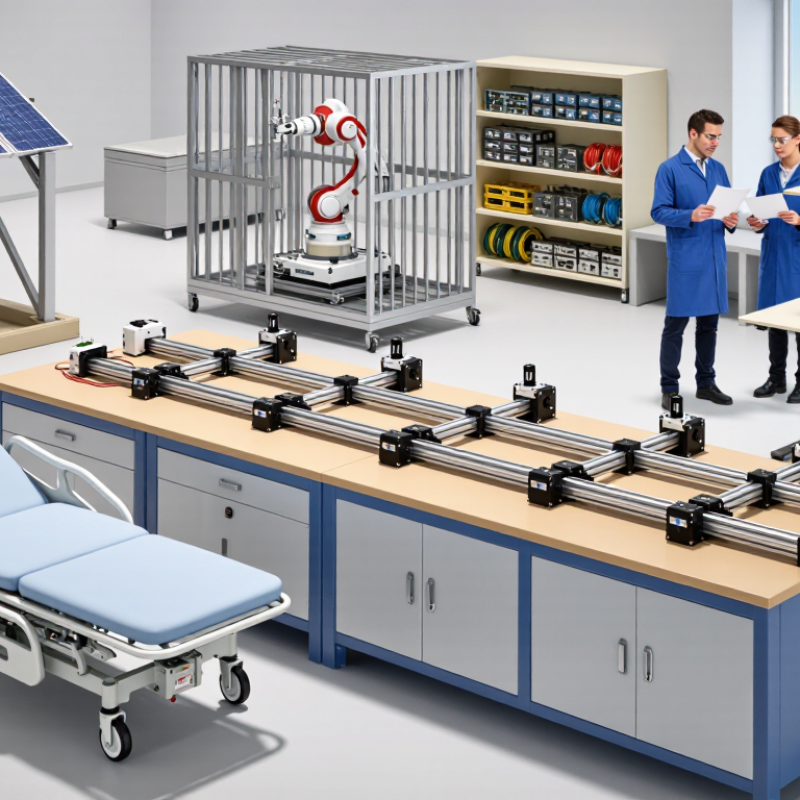
It now supports adjustable hospital beds, robotic workcells, solar tracking systems, and precision furniture.
Grand View Research places the global linear actuator market on a strong growth path through 2030. Its analysis points to rising demand for electric actuation, compact designs, and smarter factory equipment. MarketsandMarkets reports a similar direction, with automation, medical devices, and industrial machinery driving adoption. However, market estimates vary because some reports include complete actuator assemblies, while others count motors and control systems separately.
That distinction matters. A motor may deliver high force, yet perform poorly under heat, side loading, or repeated duty cycles. Buyers should examine stroke length, load capacity, speed, noise, ingress protection, duty rating, feedback options, and service support. Datasheets rarely tell the whole story.
As motion-control researcher David Auslander has observed, “A control system must serve the machine, not merely impress the specification sheet.” The same principle applies to every Linear Actuator Motor manufacturer.
This guide compares ten leading global suppliers using practical criteria. These include engineering experience, product breadth, manufacturing consistency, testing practices, regional support, and documented customer applications. Brand visibility alone is not enough.
Some rankings will remain imperfect. Public data is uneven. Supplier claims also deserve careful checking. Still, the comparison offers a useful starting point for engineers, integrators, and procurement teams choosing reliable linear motion hardware.
Global Scope: Ten Linear Actuator Motor Manufacturers by Region and Market Role
Top 10 Linear Actuator Motor Manufacturers Worldwide?
A global comparison should examine regional strengths and market roles, not only production volume. The ten manufacturers in this view represent different supply environments. North America contributes two established producers. One focuses on industrial automation, while the other serves medical equipment and vehicle platforms. Europe adds three specialists, including a precision motion supplier, a heavy-duty actuator maker, and a compact systems producer. Their products often support laboratories, packaging lines, and automated furniture.
East Asia accounts for three major manufacturing profiles. One competes through high-volume motor production. Another emphasizes miniature actuators for electronics and robotics. The third combines custom engineering with strong export capacity. Southeast Asia contributes one cost-focused manufacturer, often serving appliance and factory-equipment integrators. India contributes one expanding producer, with growing attention to agricultural machinery and infrastructure projects. Regional capability varies sharply.
That grouping is useful, but imperfect. Market boundaries blur. A factory may design in Europe, assemble in Asia, and test products elsewhere. During supplier reviews, I would check rated load, stroke length, duty cycle, noise, and thermal performance. A clean datasheet is not enough. Sample testing under repeated loads reveals more. Certification records, traceable components, warranty terms, and service response also indicate reliability. Buyers should question unusually low prices. I have seen small efficiency claims hide short service intervals, and even respected suppliers can miss application details. Past performance helps, but current production evidence matters more.
Ranking Criteria: Force, Speed, Stroke, Duty Cycle, and IP65–IP69K Ratings
Top 10 Linear Actuator Motor Manufacturers Worldwide?
A reliable worldwide ranking should measure performance, not reputation alone. The strongest manufacturers provide clear test data for force, speed, stroke length, and duty cycle. Force shows whether an actuator can move a heavy load safely. Speed matters in automation, medical equipment, and adjustable machinery. Stroke determines usable movement, while duty cycle reveals how long the motor can work before cooling. These figures should be checked under realistic loads, not ideal laboratory conditions.
Protection ratings separate dependable products from fragile ones. IP65 can resist dust and water jets, while IP66 handles stronger water exposure. IP67 supports temporary immersion, and IP69K addresses high-pressure, high-temperature washing. However, an IP rating does not prove long-term mechanical durability. Seal quality, cable design, corrosion resistance, and mounting accuracy also matter. A manufacturer may lead in force but perform poorly in speed or noise. Rankings can change when test conditions change.
Tips: Compare identical stroke lengths and loads. Read the duty-cycle graph carefully. Ask for independent test reports when claims seem unusually high. Check whether IP testing covers the complete assembly, including connectors. Field experience often exposes weaknesses that brochures miss. We should also admit one limitation: public data is sometimes incomplete, so a “Top 10” list cannot be perfectly objective. Scores should be reviewed as new test results, warranty records, and user feedback become available.
Manufacturer Profiles: 12–48 V Systems, Gear Types, and IEC 60034 Motor Data
Choosing the top ten linear actuator motor manufacturers requires more than counting product pages. A credible profile should disclose 12, 24, and 48 V performance, duty cycles, gearbox options, and test conditions. The IEA reports that electric motors consume roughly half of global electricity, making efficiency data highly relevant. However, low-voltage actuator comparisons often hide controller losses and startup current.
Worm gears provide strong self-locking behavior for lifting tables and medical platforms. Spur gears usually offer better speed and lower cost. Planetary gears suit compact designs requiring higher torque density. Ball-screw actuators can improve precision, but they demand careful lubrication and alignment. For each manufacturer, I would record rated voltage, continuous current, peak current, stroke, no-load speed, and load at 25°C. A 24 V unit may draw five amperes normally, yet exceed ten amperes during starting.
IEC 60034-1 supports consistent motor ratings, while IEC 60034-30-1 defines efficiency classes for relevant motor types. Profiles should also identify insulation class, IP rating, thermal protection, S1 or intermittent duty, and measured efficiency. The U.S. Department of Energy’s motor-system assessments show why small efficiency differences matter across long operating hours. Still, IEC data does not fully describe actuator noise, backlash, or end-stop reliability. That is the uncomfortable gap. A ranking based only on catalog figures remains imperfect. Field testing under real loads is essential.
Top 10 Linear Actuator Motor Manufacturers Worldwide? — Manufacturer Profiles: 12–48 V Systems, Gear Types, and IEC 60034 Motor Data
This anonymous technical reference compares ideal gearbox output speeds commonly used in 12–48 V linear actuator systems. The calculated values use 3,000 rpm and 3,600 rpm motor reference speeds with no-load gear reduction. IEC 60034 provides the framework for motor ratings and operating characteristics; actual actuator performance depends on load, efficiency, duty cycle, and control electronics.
Reference interpretation: Higher reduction ratios produce lower output speed and typically increase available torque. Common nominal actuator supply classes include 12 V, 24 V, 36 V, and 48 V DC. The chart excludes company and brand data.
Industry Applications: Medical, Industrial, Agricultural, Automotive, and Home Automation
Top 10 Linear Actuator Motor Manufacturers Worldwide
A credible top-ten ranking should examine application performance, not advertising claims. Leading manufacturers typically provide tested load curves, stroke accuracy, duty-cycle data, and traceable quality records. These details matter when an actuator operates daily beside a patient, production line, or greenhouse valve. Noise, heat, backlash, and emergency stopping behavior also deserve practical testing.
Medical equipment
requires smooth movement, low noise, and dependable positioning. Adjustable beds, diagnostic tables, and rehabilitation devices cannot tolerate sudden motion. Industrial systems need stronger housings, repeatable force, and protection from dust or moisture. In agriculture, actuators control vents, feeders, gates, and irrigation equipment. Field exposure makes corrosion resistance and easy maintenance especially valuable.
Automotive applications
demand compact designs, vibration resistance, and reliable operation across temperature changes. Home automation favors quiet motors, simple installation, and compatibility with control systems. A useful manufacturer comparison should review engineering support, spare-part availability, warranty terms, and independent certification evidence. However, rankings are never perfectly objective. A model suited to a hospital may fail in a muddy field. Selection teams should test real loads, not only laboratory specifications. Small details matter. The connector may matter as much as the motor.
Selection Framework: Load Capacity, Noise, Service Life, ISO 9001, and Warranty Terms
Top 10 Linear Actuator Motor Manufacturers Worldwide?
Choosing among the top ten manufacturers requires more than comparing advertised force. Load capacity should include dynamic load, static load, stroke length, mounting direction, and possible buckling. A 1,000-newton rating may change under heat, speed, or continuous duty. Ask for tested duty-cycle data, not only catalog figures.
Noise matters in medical, office, and home environments. Request sound-pressure results measured under comparable conditions, preferably using ISO 3744 methods. Service life should state cycles, duty percentage, ambient temperature, and failure criteria. “Long life” is not a specification. ISO 9001 certification supports controlled processes, but it does not guarantee quiet operation or mechanical durability. The ISO Survey 2022 recorded more than 1.2 million ISO 9001 certificates worldwide, showing its broad adoption, not automatic product quality.
Tips: Build a weighted scorecard before contacting suppliers. Give load capacity and service life the highest scores. Check whether warranty coverage includes motors, gearboxes, electronics, and labor. Compare exclusions, response times, spare-part availability, and repair locations. A two-year warranty may be weaker than a shorter warranty with clear cycle limits. I have seen selection tables reward low price while ignoring replacement access. That approach can fail quickly. Also, request samples for noise testing, because installation surfaces can amplify vibration. Use independent test records when available, and document every assumption before ranking suppliers.
Top 10 Linear Actuator Motor Manufacturers Worldwide? - Selection Framework: Load Capacity, Noise, Service Life, ISO 9001, and Warranty Terms
Anonymized comparison framework based on commonly published linear-actuator specifications and standard supplier evaluation practices.
| Rank |
Anonymized Manufacturer Profile |
Typical Load Capacity |
Typical Speed Range |
Noise Information |
Rated Service Life |
ISO 9001 Status |
Typical Warranty Term |
Evaluation Score |
| 1 |
Manufacturer Profile 01 |
2,000–12,000 N |
5–50 mm/s |
≤55 dB(A), application dependent |
10,000–20,000 cycles |
Certified site preferred |
12–24 months |
9.4/10 |
| 2 |
Manufacturer Profile 02 |
1,500–10,000 N |
4–45 mm/s |
≤60 dB(A), measured at 1 m |
8,000–20,000 cycles |
Certified or certifiable |
12–24 months |
9.1/10 |
| 3 |
Manufacturer Profile 03 |
1,000–8,000 N |
5–60 mm/s |
≤65 dB(A), model specific |
8,000–15,000 cycles |
Certificate recommended |
12 months |
8.8/10 |
| 4 |
Manufacturer Profile 04 |
800–7,000 N |
3–40 mm/s |
≤60 dB(A), test conditions required |
7,000–15,000 cycles |
Verify current certificate |
12–18 months |
8.5/10 |
| 5 |
Manufacturer Profile 05 |
500–6,000 N |
5–35 mm/s |
≤65 dB(A), gearbox dependent |
6,000–12,000 cycles |
Certified site preferred |
12 months |
8.2/10 |
| 6 |
Manufacturer Profile 06 |
400–5,000 N |
4–30 mm/s |
≤60 dB(A), nominal rating |
5,000–10,000 cycles |
Documentation required |
12 months |
7.9/10 |
| 7 |
Manufacturer Profile 07 |
300–4,000 N |
5–25 mm/s |
≤65 dB(A), application dependent |
5,000–10,000 cycles |
Verify manufacturing site |
12 months |
7.6/10 |
| 8 |
Manufacturer Profile 08 |
250–3,500 N |
4–25 mm/s |
≤70 dB(A), model specific |
4,000–8,000 cycles |
Request certificate evidence |
6–12 months |
7.3/10 |
| 9 |
Manufacturer Profile 09 |
200–3,000 N |
3–20 mm/s |
≤70 dB(A), test method varies |
3,000–8,000 cycles |
Verify before qualification |
6–12 months |
7.0/10 |
| 10 |
Manufacturer Profile 10 |
150–2,500 N |
3–20 mm/s |
Noise data available on request |
3,000–6,000 cycles |
Certificate verification needed |
6–12 months |
6.7/10 |
Selection notes:
Load capacity, speed, noise, and service life vary by actuator geometry, duty cycle, mounting orientation, gearbox, ambient temperature, and control method. ISO 9001 should be confirmed for the actual manufacturing site and current certificate scope. Warranty terms should be reviewed together with exclusions, return procedures, response time, and spare-parts availability.
Scoring emphasis: load capacity 25%, noise 20%, service life 20%, ISO 9001 quality evidence 20%, and warranty terms 15%. Noise values are commonly stated at 1 metre but should be compared only under equivalent test conditions.
FAQS
North America offers industrial automation and medical equipment specialists. Europe provides precision, heavy-duty, and compact motion systems. East Asia supports high-volume, miniature, and custom production. Southeast Asia often competes on cost. India is expanding into agricultural machinery and infrastructure projects.
Compare dynamic load, static load, stroke length, mounting direction, speed, and buckling risk. A 1,000-newton rating may change under heat or continuous operation. Catalog numbers alone can mislead.
Request tested data for repeated movement. Check duty percentage, cycle count, ambient temperature, and failure criteria. Test samples under realistic loads. A short trial helps.
Installation surfaces can amplify vibration. Request sound-pressure results under comparable conditions. Measurements following ISO 3744 methods may improve consistency. Still, your actual frame can sound different.
No. It supports controlled processes and documented procedures. It does not guarantee quiet operation, long service life, or perfect mechanical durability. Certification is evidence, not proof.
Check coverage for motors, gearboxes, electronics, labor, and replacement parts. Review exclusions, response times, repair locations, and cycle limits. A longer warranty is not always stronger. Read the small conditions.
Set weighted scores before contacting suppliers. Give high weight to load capacity and service life. Include noise, thermal performance, certification, service access, and price. Document every assumption.
Low prices may hide short service intervals or limited spare-part access. Compare tested performance, warranty terms, and component traceability. I might overvalue upfront savings. Replacement delays can cost more.
Past performance helps, but current production evidence matters more. Request recent samples, test records, and service data. A respected supplier can still miss application details. Verify the present product.
Ask for rated-load data, stroke specifications, duty-cycle tests, noise results, thermal information, and certification records. Check component traceability and warranty documents. Independent test records are useful when available.
Conclusion
This guide reviews ten leading Linear Actuator Motor manufacturers worldwide, comparing their regional coverage, market roles, and engineering capabilities. The ranking considers key performance factors such as force, speed, stroke length, duty cycle, and protection ratings from IP65 to IP69K. It also examines common 12–48 V systems, gearbox designs, motor configurations, and relevant IEC 60034 data to help readers understand differences in efficiency, reliability, and operating conditions.
The article explores how these solutions support medical equipment, industrial automation, agriculture, automotive systems, and home automation. A practical selection framework is provided for evaluating load capacity, operating noise, expected service life, ISO 9001 quality systems, and warranty terms. By combining technical specifications with application requirements, readers can identify the most suitable actuator design for their performance, environmental, and maintenance needs.
 DC Motor B2B
